




Respiratory Tract
The respiratory tract is divided into two main parts: the upper respiratory tract, consisting of the nose, nasal cavity and the pharynx; and the lower respiratory tract, consisting of the larynx, trachea, bronchi and the lungs.
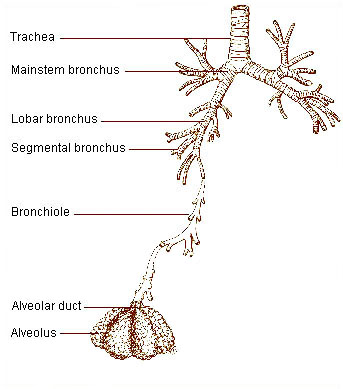
The trachea, which begins at the edge of the larynx, divides into two bronchi and continues into the lungs. The trachea allows air to pass from the larynx to the bronchi and then to the lungs.
The bronchi divide into smaller bronchioles which branch in the lungs forming passageways for air. The terminal parts of the bronchi are the alveoli. The alveoli are the functional units of the lungs and they form the site of gaseous exchange.
Suggested Citation
SEER Training Modules: Respiratory Tract. U.S. National Institutes of Health, National Cancer Institute. Cited 24 March 2026. Available from: https://training.seer.cancer.gov.