 An official website of the United States government

Lymphatic System
The major components of the lymphatic system are lymphatic vessels, lymph, lymph nodes, and some other lymphatic organs.
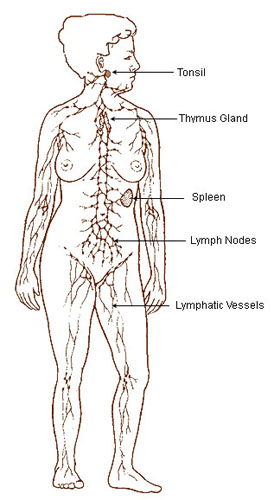
Lymphatic vessels carry lymph, a colorless liquid, throughout the body. Along lymph vessels are small bean-shaped glandular nodules called lymph nodes.
Other lymphatic organs are:
- Tonsil: clusters of lymphatic tissues just under the mucous membranes that line the nose, mouth, and pharynx.
- Spleen: it is similar to a lymph node in shape and structure but it is much larger.
- Thymus: a soft organ with two lobes that is located anterior to the ascending aorta and posterior to the sternum.
- Peyer patch: lymphoid tissue on the visceral surface of the small intestine.