




Conducting Passages
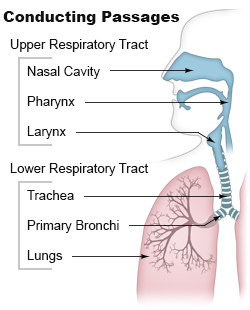
The respiratory conducting passages are divided into the upper respiratory tract and the lower respiratory tract. The upper respiratory tract includes the nose, pharynx, and larynx. The lower respiratory tract consists of the trachea, bronchial tree, and lungs. These tracts open to the outside and are lined with mucous membranes. In some regions, the membrane has hairs that help filter the air. Other regions may have cilia to propel mucus.
Click a menu item listed below to learn more about a component(s) of the conducting passages.
Suggested Citation
SEER Training Modules: Conducting Passages. U.S. National Institutes of Health, National Cancer Institute. Cited 11 April 2026. Available from: https://training.seer.cancer.gov.